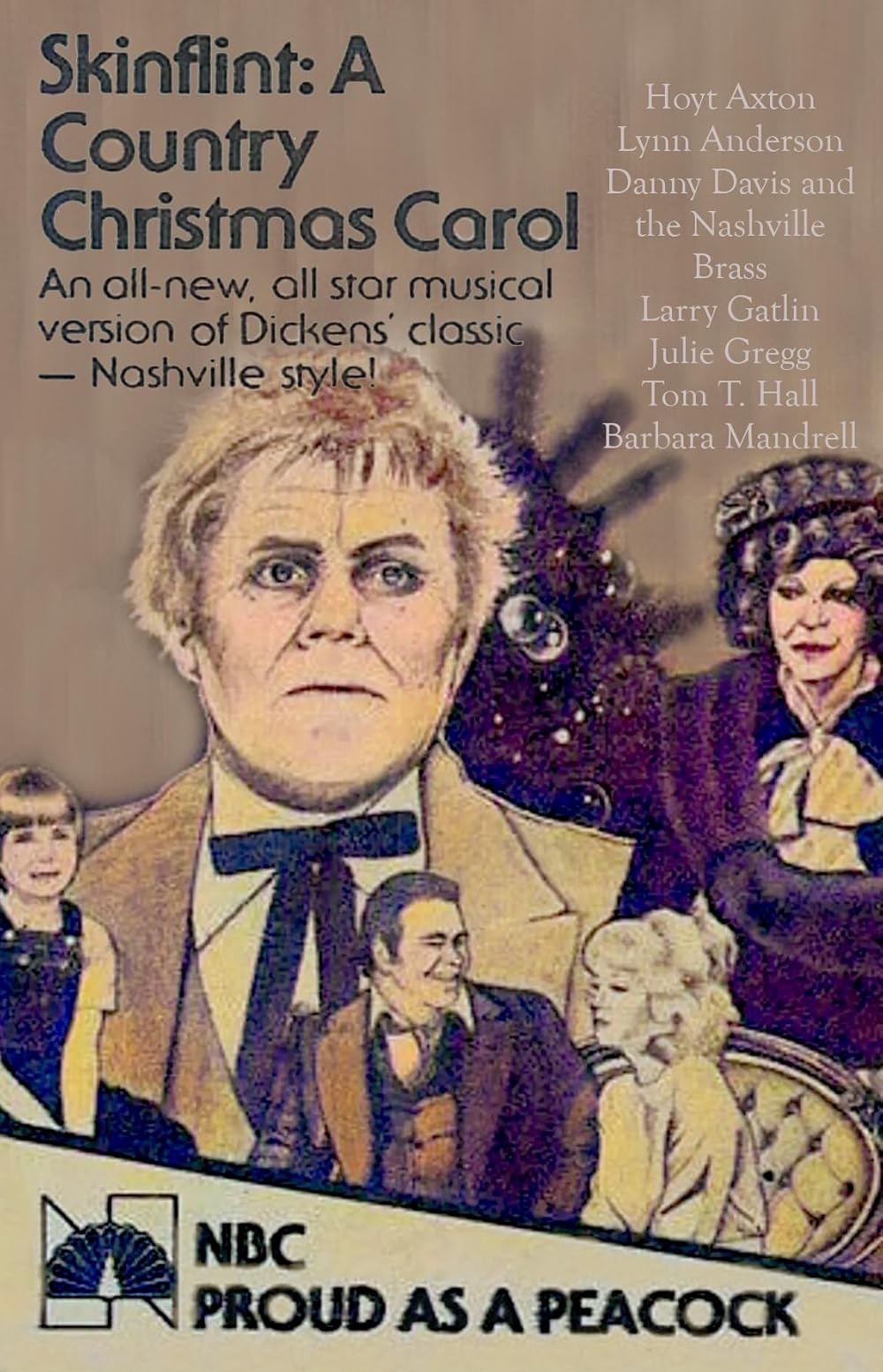
In 1979 the urban cowboy/countrypolitan scene is at the peak of its cultural power. Hee Haw is so fucking big that it gets a spinoff. No shit, there was a Hee Haw spinoff. Kenny Rogers, Dolly Parton and Glen Campbell are global stars.

The country music culture scene is essentially at war with itself. Outlaw leftist country like Waylon Jennings, Willie Nelson and Kris Kristofferson are increasingly less promoted by the Nashville establishment and the American right has been courting Nashville since Nixon’s frequent campaign stops there in 1968 and 1972. Stagflation and stagnant wages have Nashville singing a generally more conservative tune by 1979. Mind you, a more conservative tune didn’t mean in 1979 what it does now.
So where does a straightforward retelling of a Christmas Carol land in the country music scene in 1979? It appeals to the left leaning messaging that has been baked into the original. Flint (Hoyt Axton) should be paying a living wage, be mindful of employee work life business and actively giving to the community that made him comfortable. But there’s something else bubbling beneath the surface here which is interesting. Flint spends much of the first act constantly going on about taxes and how taxes subsidize the poor. Prop 13 and the Tax Revolt of 1978 have dialogue like’s Flint’s early dialogue as firmly sympathetic. Imagine watching A Christmas Carol and thinking “Scrooge has some points!” It’s a retelling by a country that believes leftism has failed.

The movie itself is a spectacle of stars from multiple country labels. Hoyt Axton has carved out a spot for himself In addition to penning songs made popular by Elvis and Three Dog Night. Barbara Mandrell was about to launch The Mandrell Sisters on NBC in 1990. Cameos? Fucking everyone. I got jumpscared by The Statler Brothers.

The music is mostly just… fine. But if you’re watching this you’re here for the bizarre anachronistic charm. Its large, magnificent soundstages make it feel like television of the 1950s or 1960s but it’s shot on 3/4 inch tape which feels wildly fresh. It’s politically a tug of war but more than anything it’s a big, beautiful ad for a music industry going through a generational transformation.
It’s a shame this is caught in rights hell because this a better cultural mirror than versions of A Christmas Carol which safely retread familiar iconography.